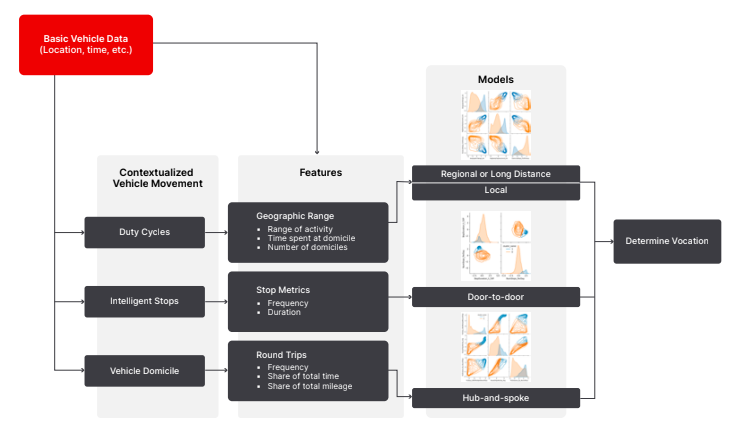
Figure 1: The vehicle vocation system clusters every active vehicle into one of five vocations on a monthly basis based on activity in the previous three months. The system first analyzes raw telematics data (such as location, time, and speed) to create Contextualized Vehicle Movement Datasets of a vehicle’s domicile, the stops it makes, and its duty cycles.
Combining vocation with vehicle weight class adds further precision. Separating medium-duty delivery vans from heavy-duty regional freight trucks gives reviewers the specificity they need to evaluate whether the proposed investment matches the documented demand.
The regulatory bridge that strengthens your narrative
For grant writers, the most compelling data is data that already speaks the language of the funding program. Altitude’s local vocation threshold of under 150 air-miles aligns directly with the Federal Motor Carrier Safety Administration (FMCSA) Hours of Service short-haul exemption, meaning that planners aren’t introducing a new definition they have to defend, they’re reinforcing one reviewers already recognize.
This classification formatting extends to regional-haul and long-haul. Definitions that are built around domicile habits and miles traveled mirror how FMCSA and the broader industry already draw these distinctions. Regulatory alignment removes confusion in grant review and enhances credibility.
Turning thresholds into auditable grant language
A grant application with vocation data can be compellingly specific. Rather than writing “significant delivery activity was observed on this corridor,” a planner can write: “Vehicles averaging more than 27 stops per day with stop durations under 108 seconds were identified, consistent with parcel delivery and waste collection operations — indicating concentrated curbside demand that current loading zone infrastructure cannot accommodate.”
That specificity matters because it gives reviewers something to evaluate rather than accept on faith. Contrast this with a generic commercial vehicle count and anecdotal traffic observations, which force reviewers to make assumptions about what the traffic actually means. Auditable thresholds grounded in natural data clusters — not arbitrary human-drawn cutoffs — hold up to scrutiny in ways that raw counts simply don’t.
Evidence reviewers can follow
Competitive grant applications don’t just describe a problem, they prove it. Vehicle class data describes the traffic and vocation data explains it. When your narrative states exactly what type of freight activity is occurring, ties it to a recognized regulatory definition and backs that up with measurable behavioral thresholds, you’ve moved from observation to evidence. That’s the difference between an application that merely sounds credible and one that actually is.