Use case 1: Get data where federal counts don’t reach
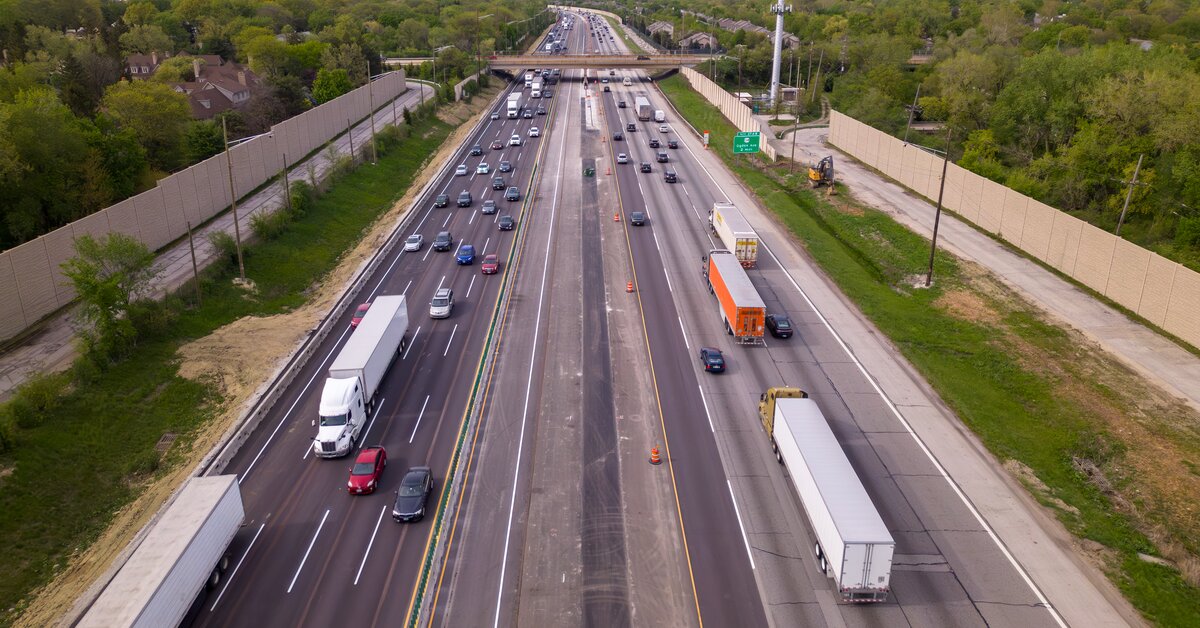
Federal Highway Administration (FHWA)-derived AADT relies on camera-based counts placed on major interstates and highways. That means federal cameras often miss or get poor samples on secondary corridors, port connectors, last-mile arterials and industrial access roads. Altitude’s commercial-vehicle data covers segments down to roughly 500 meters of roadway, including roads that have no permanent counters at all.
Why it matters: A planner designing a port-to-rail freight corridor needs reliable truck volumes on a county road connecting a marine terminal to an inland intermodal facility. No FHWA camera exists on that stretch. Altitude’s telematics-based counts fill the gap and give the project team defensible data for their pavement design recommendations.
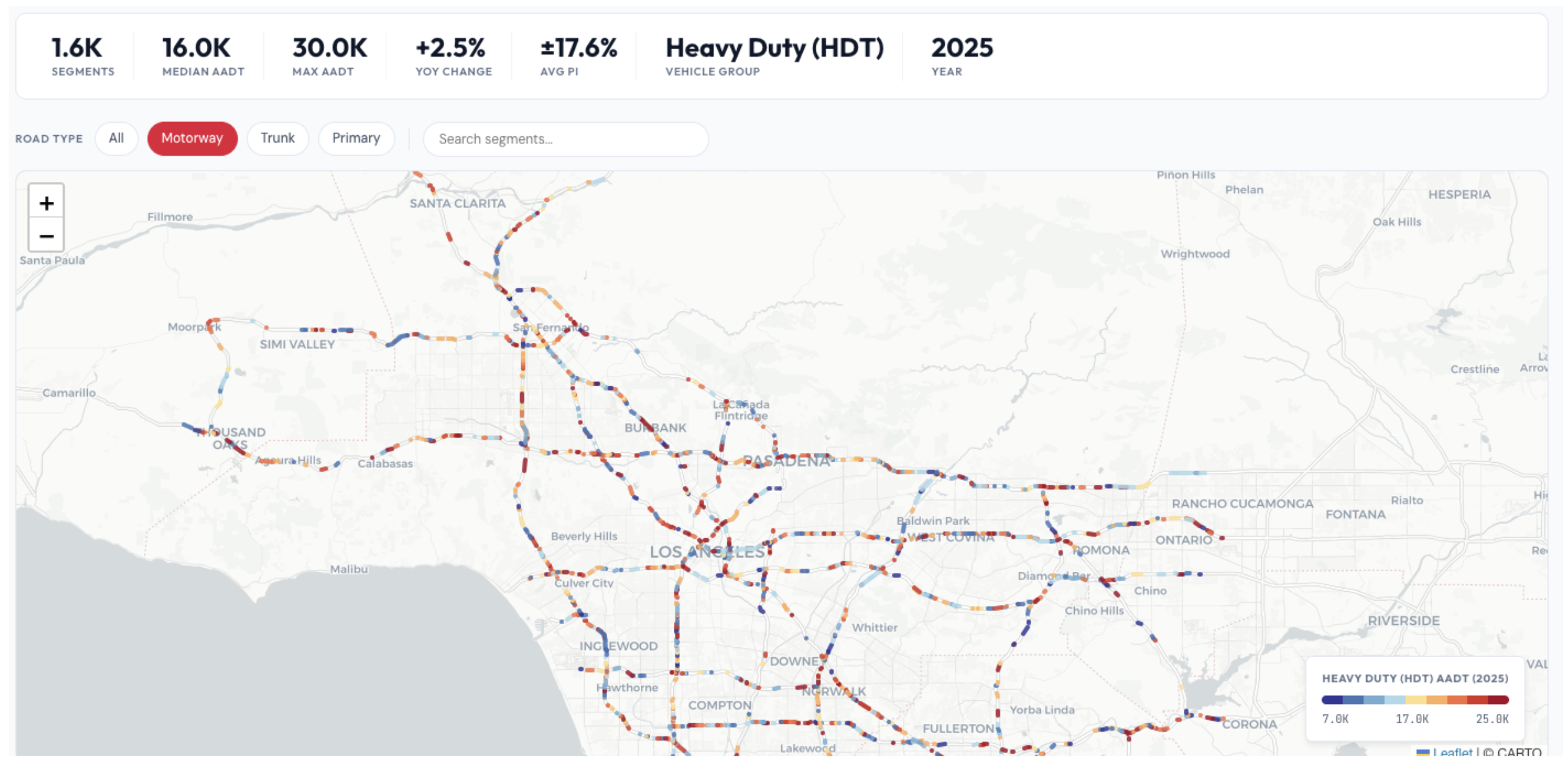
Figure 1: Heavy-duty truck AADT across the Los Angeles region, filtered by motorway segments. Color intensity reflects volume (from 7K to 25K HDT per day) on corridors where many federal counters have no commercial vehicle classification.
Use case 2: Separate heavy- and medium-duty counts, not one blended number
General AADT tells you how many vehicles use a road. It doesn’t tell you how many of those are 80,000-lb Class 8 trucks. For freight infrastructure work, that distinction matters enormously for pavement thickness choices, turning radius design, bridge load ratings and drainage. These examples and more depend on weight class distribution, not just volume.
Why it matters: A state Department of Transportation engineering team is evaluating whether to resurface a freight corridor with standard asphalt or a heavier-duty concrete mix. Altitude’s heavy-duty truck AADT shows that 70% of truck volume on that corridor is Class 7–8. The more specific finding justifies the more expensive material and helps protect the agency in a future audit.
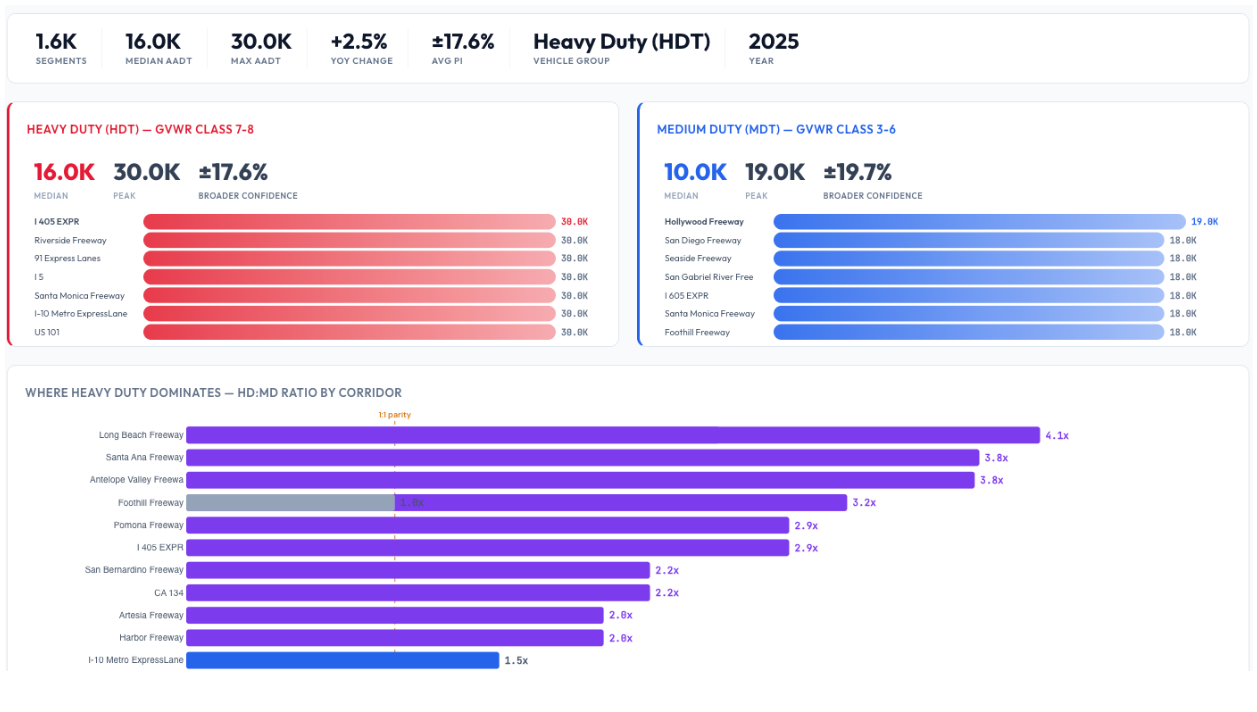
Figure 2: Side-by-side heavy-duty vs. medium-duty truck AADT with the HD:MD ratio by corridor. Long Beach Freeway shows 4.1x more heavy-duty than medium-duty traffic, the kind of distinction that drives pavement design and bridge load decisions.
Use case 3: File HPMS and MIRE reports on time, with current data
The standard lag for validated federal AADT is one to two years. Altitude delivers previous-year estimates within 90 days of year-end. For planners working on federal reporting cycles or grant applications, submitting data that reflects last year rather than three years ago is a meaningful competitive advantage.
Why it matters: A Metropolitan Planning Organization preparing its long-range transportation plan update needs current freight volume data to support a grant application. With Altitude, they can submit using data from the prior calendar year rather than relying on counts that predate a major warehouse development that changed truck patterns on the corridor.
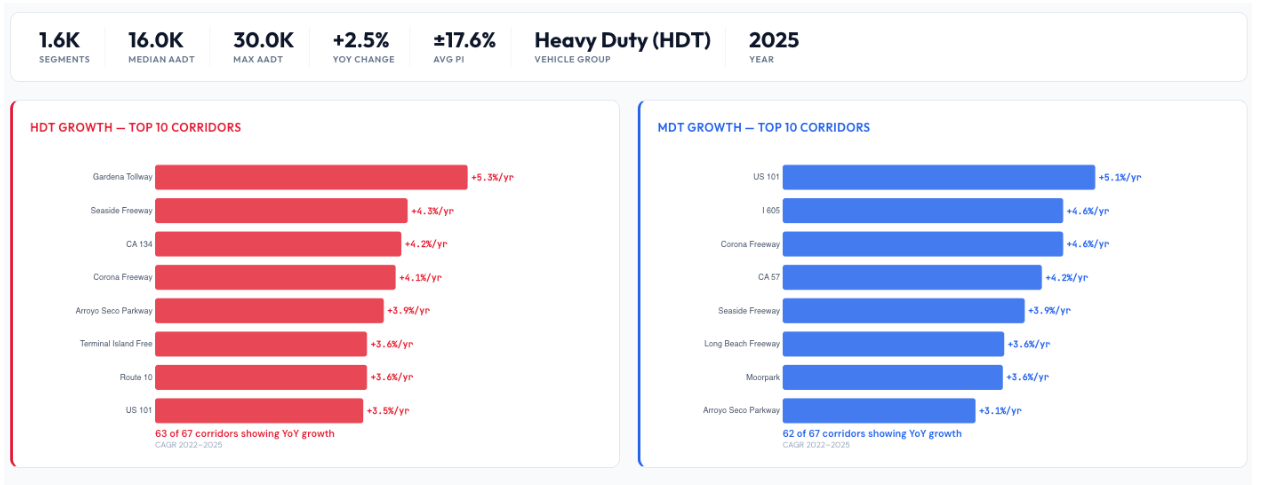
Figure 3: Four-year compound annual growth rates (2022–2025) for heavy-duty and medium-duty trucks, delivered within 90 days of year-end. Most corridors show HDT growth — patterns invisible in federal data that won’t be validated for another 1–2 years.
Use case 4: Transparent and defensible confidence intervals
One of the reasons planners default to federal AADT is that it’s widely accepted, so you can cite it without having to defend it. Altitude’s traffic-volume binning provides explicit confidence intervals and uses FHWA-aligned validation methods, giving consultants something they can actually explain and defend in front of a review panel or grant committee.
Why it matters: An engineering firm submits a corridor safety study that includes Altitude AADT counts for a non-Interstate freight route. When the state review board asks how the numbers were derived, the consultant can walk through the Expansion Factor methodology and confidence range rather than saying, “We estimated based on the nearest counter 12 miles away.”
Use case 5: Validate or supplement federal data with a strong secondary source
Planners don’t need to abandon federal AADT to use Altitude. In fact, using both is the strongest approach. Altitude’s commercial telematics data can confirm federal counts on corridors where both exist, and stand in as the primary source where federal counts are absent or stale.
Why it matters: A freight planning consultant is building a truck parking demand study across a multi-state corridor. On major interstates, they cross-reference Altitude heavy-duty truck counts against FHWA data to validate their assumptions. On secondary state routes that connect to truck stops, Altitude is the only reliable source, and it shows meaningfully different volumes than what planners had assumed.